Sheet 05The Panel
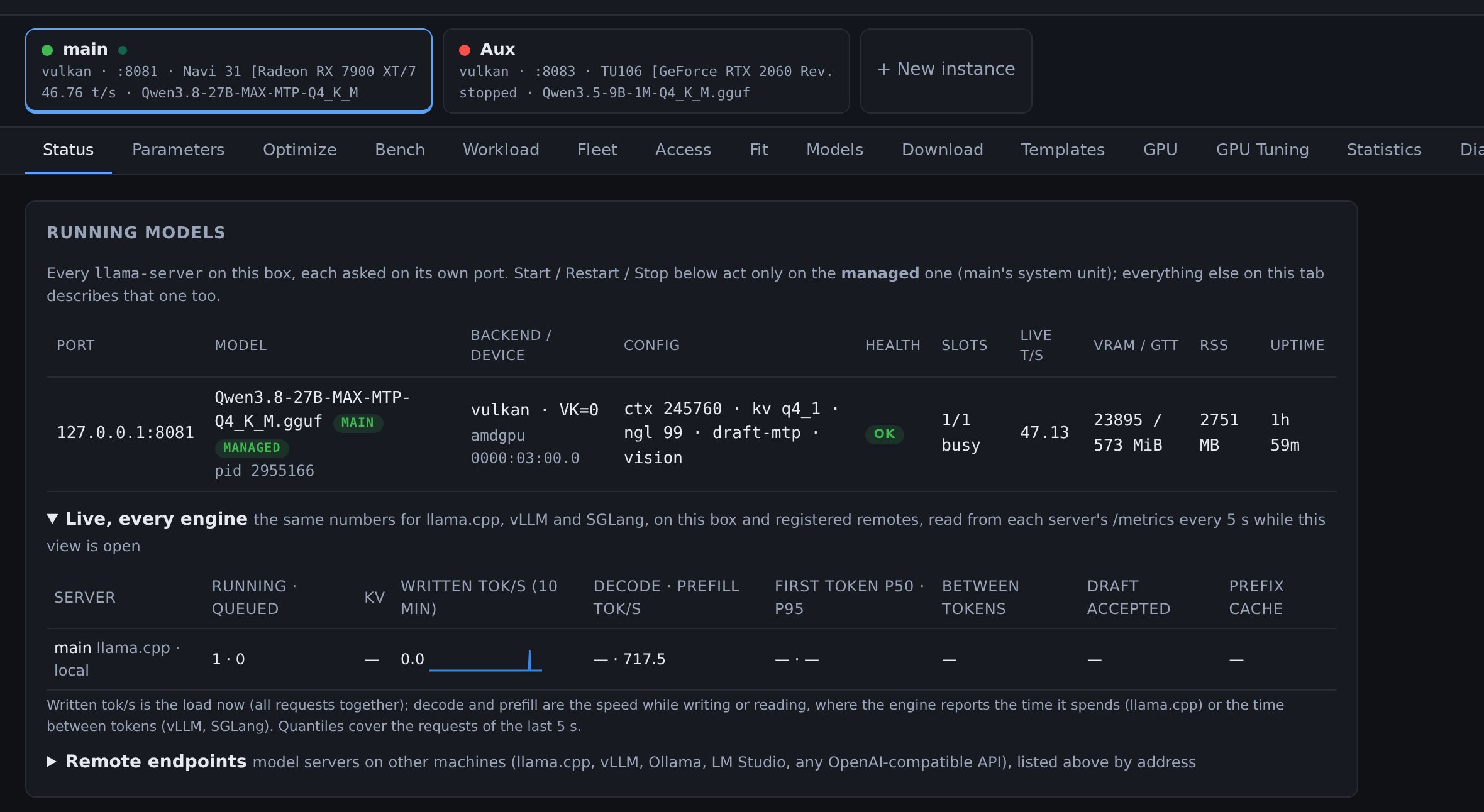
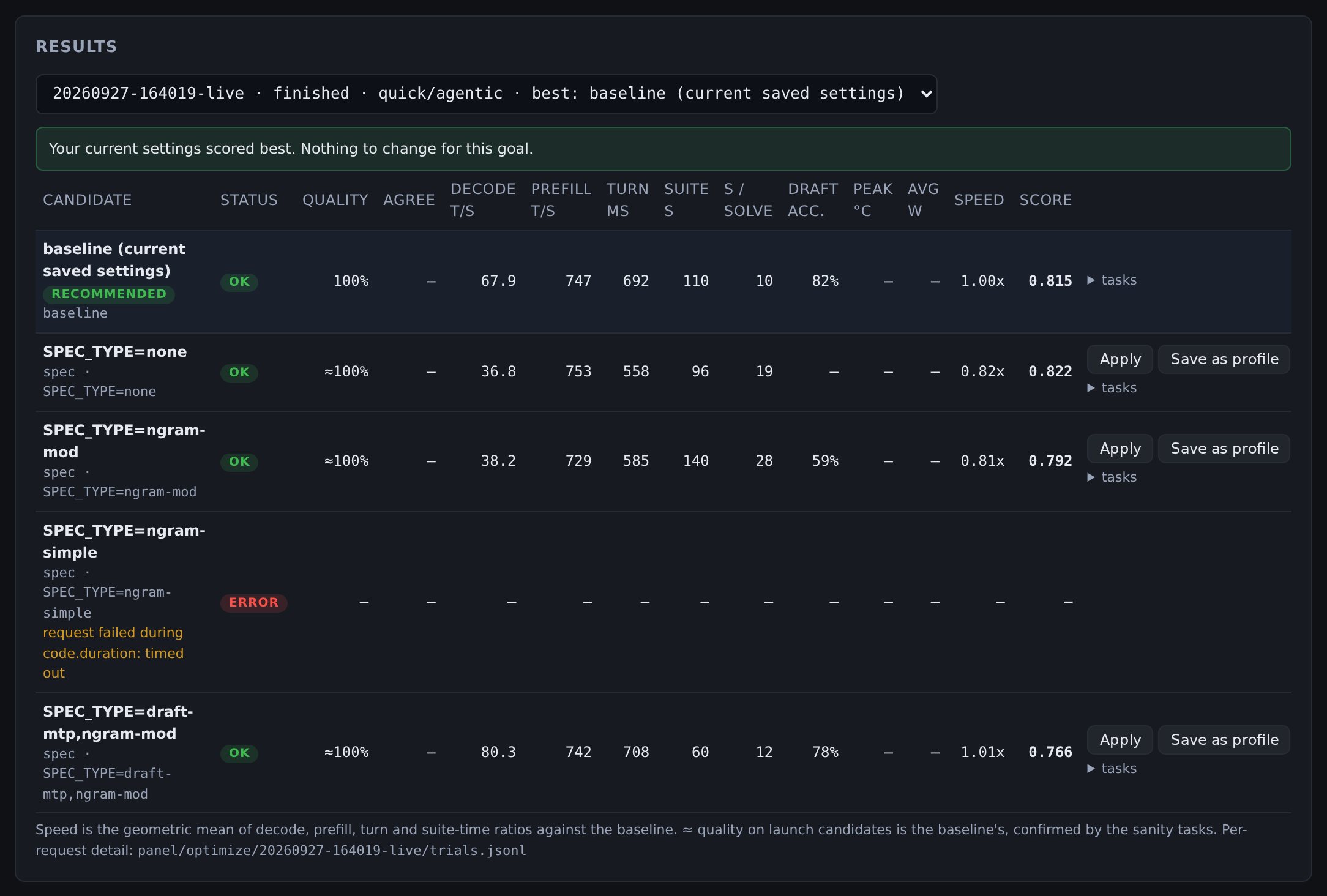
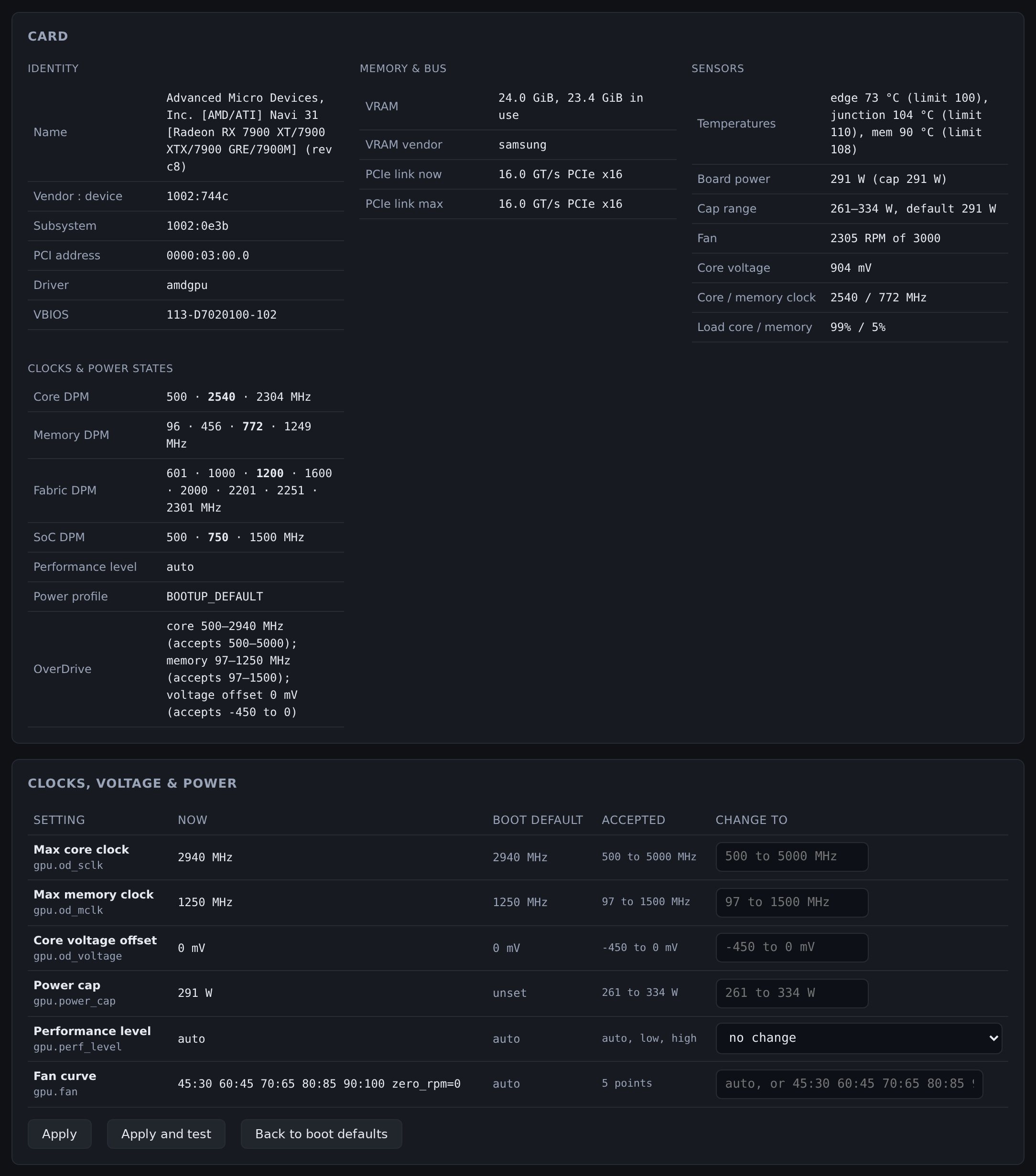
The whole machine, in one page.
Every picture is the real Panel. Open the live demo and click through it yourself.
Sheet 01Version 5db82d6 · 11/13/2026 · all Rust
LexiSuite is everything needed to run AI models on hardware you own, built as one system: an inference engine measured faster than llama.cpp on large models and long contexts, the control panel that runs the whole machine, an OS that boots from a USB stick, and a kernel designed around inference. One codebase. Nothing in the cloud.
Free for private, research and educational use · $100 per instance per year commercially
Sheet 02Measured, not claimed
Both lanes stream text at the speed each engine measured on the same Radeon RX 7900 XTX, with the same model file and the same settings: the 27B cases on 11/13/2026 against llama.cpp release b12318, the others on 11/10/2026 against release b12230. Pick a case. One of them is a case we lose.
Sheet 03Why nothing else is like it
Running models on your own hardware normally means assembling an inference server, a chat front end, a Linux distribution, a hypervisor, quantization and training scripts and monitoring, each from a different project. You are the ferry between the islands. LexiSuite is every one of those layers, built to the same rules, tested together and shipped as one image.
| Layer | Normally assembled from | In LexiSuite |
|---|---|---|
| Inference engine | llama.cpp, Ollama, vLLM, LM Studio | LexiEngine. Original Rust engine with its own GPU kernels, not a wrapper. llama.cpp can be installed beside it from the Panel, so you can repeat every comparison yourself. |
| Control and chat | Open WebUI, a dashboard, SSH | LexiPanel. One authenticated GUI for every operation on the machine, from the first model download to the GPU's power cap. |
| Operating system | Ubuntu, Debian, Proxmox | LexiOS. Boots straight into the Panel. Firewall verified at boot, signed updates with rollback, a self-test on every start. |
| Kernel | Linux, general purpose | LexiKernel. Rust, Linux ABI, inference-first scheduling. Linux 7.4 is the other boot entry on the same stick. |
| APIs | Whatever the server offers | OpenAI Chat, Completions and Responses, Anthropic Messages, embeddings, rerank, and typed decisions that return a probability for every option. |
| Tuning | Hand-edited flags, forum posts | Benchmarks against a reference engine, an optimizer that keeps only measured winners, and re-quantization to fit the card you have. |
| Training and VMs | Python environments, QEMU | LoRA fine-tuning from the Panel, and a safe-Rust virtual machine monitor with GPU passthrough. |
Sheet 04The platform
Our own Rust inference server: GGUF models on Vulkan (AMD, Intel, NVIDIA), CUDA and CPU. Speculation for greedy and sampled requests, contexts up to 1,048,576 tokens, no memory budget to set. Serves Qwen3, Qwen3.5 and 3.8, Gemma 4 and DeepSeek-V2.
Model library and downloads, instances per GPU, chat, benchmarking and auto-tuning, fitting, training, GPU tuning and power caps, statistics, crash evidence, files, a terminal, users and API keys, fleets and virtual machines. One page, tabs across the top.
An appliance OS on Linux 7.4 that boots from a USB stick straight into the Panel. First-boot setup from a browser, Secure Boot with a development certificate, and a self-test that says what it could and could not prove.
A Rust kernel with a Linux ABI: inference-first scheduling, VRAM admission, an IOMMU required by design. It has booted a real laptop from USB and served the Panel to another machine. Its own driver now starts a physical RX 7900 XTX as far as running a command buffer with an interrupt-delivered fence; GPU inference still goes through a Linux guest.
It is developed every day by its author as their own primary AI platform.
Sheet 05The Panel
Every picture is the real Panel. Open the live demo and click through it yourself.
Sheet 06Get there
Take the image from the download page: one image of about 350 MB that carries the kernel, the OS, the engine and the Panel. No account, no licence key.
On Linux one command checks the image, writes it and reads it back: sudo bash install-to-usb.sh. On Windows or macOS use any image writer. Boot the PC from the stick.
The machine's screen shows an address. Open it from any browser on your network, create the administrator, download a model and chat, or point an OpenAI or Anthropic client at it.
Sheet 07Surveyed and unsurveyed
5db82d6), 11/13/2026: 4,154 engine, 568 server, 2,346 Panel, 1,611 LexiOS and 1,730 LexiKernel tests, 0 failed, and the 149 CUDA kernel comparisons on an RTX 2060. The engine and Panel compiled for Windows and Apple silicon with no errors on 11/12/2026 (compile check only).Support the project
LexiPanel is free for private, research and educational use, and it stays that way. Supporter packs fund the work — and every one of them ships you real seed from Black Pine Genetics.
Three full packs of Black Pine Genetics seed, selected at random from current stock and shipped to you.
Five full packs, selected at random from current stock and shipped to you. The best value per pack.
Ten full packs, selected at random from current stock and shipped to you. The deepest support tier.
Required for commercial deployment. Free for private, research and educational use — nothing to buy and nothing to register. There is no licence key and no activation: licensing runs on the honour system. Includes no physical goods.
Supporter packs include physical goods shipped from Black Pine Genetics and are available to adults 21 and over only, in jurisdictions where such seed may lawfully be sold and received. Seed selection is random and cannot be chosen.
Sheet 08Licence
Free for private, research and educational use. Commercial use is $100 per instance per year, which includes support and priority fixes for problems specific to your hardware. No licence keys and no usage checks: commercial users are trusted to buy what they use. White-label is available under the commercial licence. The source code is proprietary.